Glass Treatment vs Glass Coating: Which Lasts Longer? (Malaysia 2026)
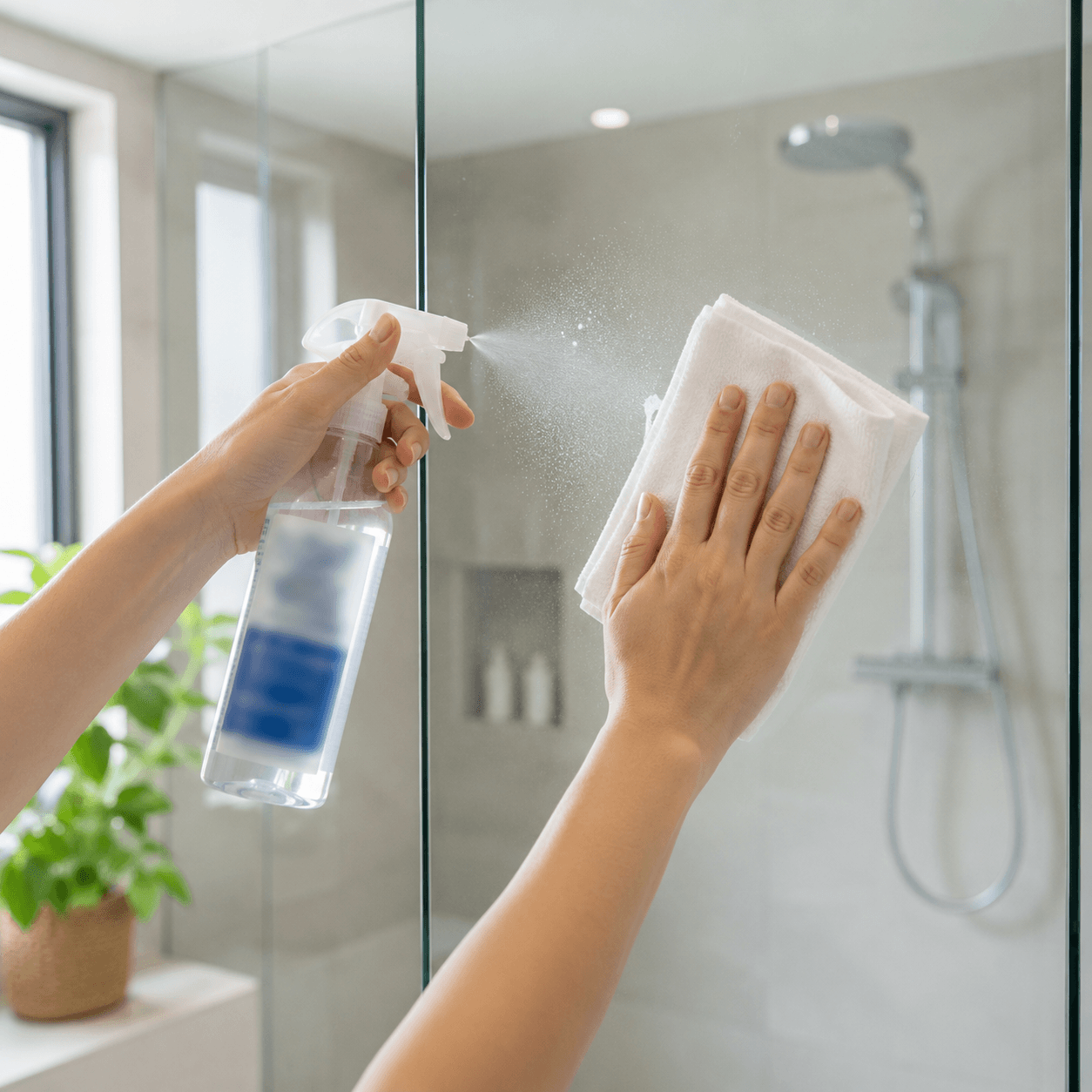
“Glass treatment” and “glass coating” are often used interchangeably but mean different things. Glass treatment: light-duty sealant, lasts 2-12 months (RainX, Krudkutter). Glass coating: chemical bonding system, lasts 2-10 years (EnduroShield, ClearShield). Glass coating lasts dramatically longer because the chemistry is fundamentally different. Here’s how to tell which a product is before you buy.
The shelves at Mr DIY have 6+ products that call themselves either “glass treatment,” “glass coating,” “glass sealer,” or “nano-coating.” The labels overlap. The chemistry doesn’t.
Here’s how to read the labels and know which one will actually last.
The chemistry difference
Glass treatment = a thin layer of hydrophobic compound (usually silane-based or polymer wax) that sits ON the glass surface. Like a film of car wax.
Behaviour: water beads, soap rinses easier. But the film wears off relatively fast — with daily showering, typically 2-12 weeks.
Glass coating = a chemical compound (typically fluoropolymer-silica hybrid) that chemically bonds with the glass silica at the molecular level. It becomes part of the glass surface.
Behaviour: water beads strongly, soap and minerals can’t bond. Lasts 2-10 years because it’s not just sitting on top — it’s bonded.
Lifespan comparison
| Product type | Chemistry | Lifespan (residential) | Typical brands |
|---|---|---|---|
| Spray treatment | Silane / wax | 2-12 weeks | RainX, Krudkutter, generic Shopee |
| Mid-duty treatment | Enhanced silane | 3-6 months | Some Diamon-Fusion lite, some Aquapel |
| DIY coating | Fluoropolymer-silica | 2-3 years | EnduroShield DIY |
| Pro coating | Fluoropolymer (industrial) | 5-10 years | ClearShield Pro, Diamon-Fusion Pro |
How to tell from the label
Look at the bottle. Key indicators:
It’s probably a TREATMENT (short-life) if:
- Application time is “1-5 minutes”
- No cure time mentioned
- Lasts “up to 6 months”
- Reapply “monthly” or “as needed”
- Spray-on application, no wiping or curing
- Price < RM 50 per bottle
It’s probably a COATING (long-life) if:
- Application includes a separate “cleaner” step
- Has a cure time (4-12 hours)
- Lasts “3-5 years” with reapplication option
- Sold as a kit (cleaner + coating + applicator cloth)
- Mentions fluoropolymer or specific chemistry
- Price > RM 100 per kit
Which should you buy?
Choose a TREATMENT if:
- Renting (don’t want to invest in a property you don’t own)
- Testing whether you’ll actually maintain the habit
- Glass is in low-use bathroom (e.g., guest bathroom)
- Budget under RM 50
- Need a quick before-house-viewing fix
Choose a COATING if:
- You own the home
- Glass is in main daily-use bathroom
- You’ll stay 3+ years
- You want to actually solve the problem, not patch it
- The maths work out (RM 218 once vs RM 35 × 12 times = same money, less effort)
Cost over 3 years
Treatment route:
- RainX bottle RM 35, reapply every 8 weeks
- 6 reapplications/year × 3 years = 18 applications
- Total cost: ~RM 630
- Plus your reapplication time: 18 × 5 minutes = 90 minutes
Coating route:
- EnduroShield kit RM 218 once
- Lasts 3 years, no reapplication needed
- Total cost: RM 218 (66% cheaper)
- Plus initial application time: 30 minutes once
Coating is cheaper if you’ll be in the same home for 3+ years. Treatment is cheaper if <1 year.
Protect this glass for 3 years
EnduroShield's DIY kit bonds chemically to shower glass. Australian-made, TÜV Rheinland tested, applies in 10-30 minutes.
Shop the kit →Frequently asked questions
Why is fluoropolymer chemistry so much longer-lasting than silane?
Fluoropolymer molecules have stronger covalent bonds to the glass silica, plus the carbon-fluorine bonds within the polymer are among the strongest organic bonds known. Silane bonds to glass weaker and the polymer chain is less stable under repeated wetting/drying. Different bond chemistry = different lifespan.
Can a coating ever degrade faster than expected?
Yes — if applied to dirty glass (bonds to contamination, not glass), exposed to harsh chemicals (limescale removers), or scrubbed with abrasives. Following the application instructions and avoiding harsh cleaners keeps the coating in design range.
Is “nano-coating” a meaningful term?
Sometimes. Real nano-coatings have particle sizes in the nanometre range and fill microscopic surface pores. Many products marketed as “nano” are actually just regular silane treatments using the buzzword. Look at composition + lifespan claims, not the marketing label.
Can I layer a treatment on top of a coating?
You can but it’s pointless — the treatment will wear off in weeks while the coating underneath still works. Just use the coating alone, reapply treatment only if the coating has fully worn (year 3+).