Is Bleach, CLR or Magic Eraser Safe on Shower Glass? (Malaysia Guide)
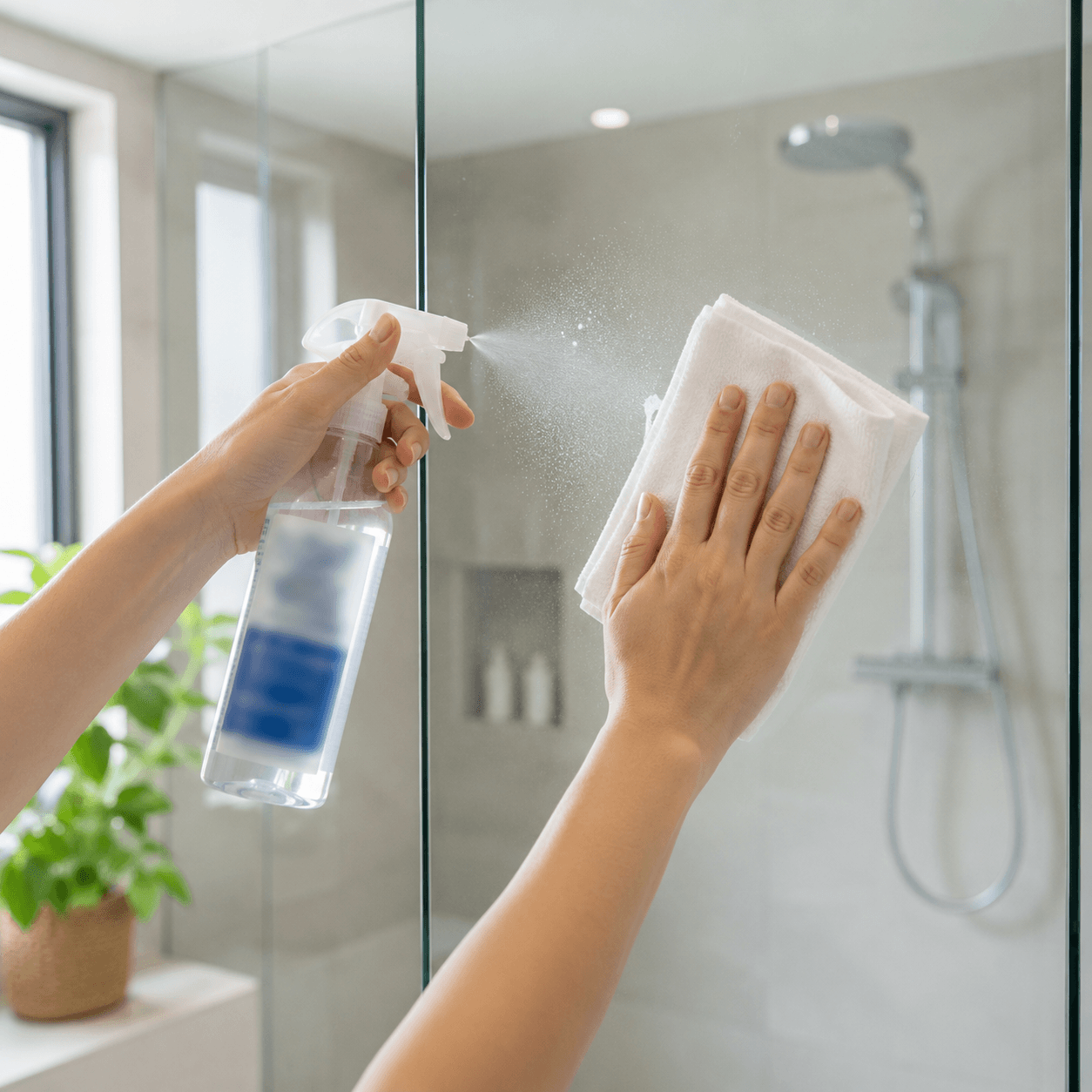
Most common cleaners are safe on the GLASS itself in moderation, but harsh acids and abrasives can damage frames, seals and the finish, and none of them stop stains coming back. Bleach, CLR, vinegar and a magic eraser will not ruin the glass if you go easy, yet none change the surface, so the scum returns after your next shower. The only lasting fix is a bonded coating that makes the glass non-stick so nothing can grip. EnduroShield lasts up to 3 years DIY from RM218 and is TUV Rheinland certified since 2011.
Stand in front of a shower screen streaked with white scale and your first instinct is to reach for the strongest thing under the sink. Bleach, CLR, a magic eraser, maybe even the muriatic acid from the hardware store. The logic feels simple: harsher cleaner, cleaner glass.
Two questions actually matter here. First, is it safe, on the glass and on everything around it. Second, does it fix the problem for good. This guide answers both for the cleaners Malaysian households reach for most, then shows you the part almost nobody mentions.
Is each cleaner safe on shower glass?
Short version: most everyday cleaners are safe on the glass itself if you use them in moderation and rinse well. The damage usually lands on the frames, seals and stone around the glass, or comes from scrubbing too hard. Here is the honest rundown.
| Cleaner | Safe on the glass? | Watch out for | Stops stains returning |
|---|---|---|---|
| White vinegar | Yes, in moderation | Metal frames, natural stone, grout | No |
| Bleach | Yes on glass | Discolours silicone and grout, fumes | No |
| CLR | Yes, brief contact | Etch risk if left too long, harms metal and stone | No |
| Barkeepers Friend | Yes, gentle paste | Mildly abrasive, do not scrub hard | No |
| Magic eraser / melamine | Yes on light film | Abrasive, can micro-scratch with heavy use | No |
| Baking soda paste | Yes | Mild abrasive, use soft | No |
| Toothpaste | Yes, mild | Not designed for this, inconsistent | No |
| Muriatic/hydrochloric acid | NO, too harsh | Etches glass, dangerous fumes, avoid | No |
| WD40 | Leaves an oily film, not recommended | Smears, slip hazard | No |
Look at the last column. Every single one says no. That is the whole point.
The catch: none of these stop the stain coming back
Here is what no cleaner bottle tells you. Bare shower glass is not perfectly smooth. Under a microscope the surface is full of tiny pores and valleys. Every hot shower leaves behind water loaded with minerals, and as it dries those minerals settle into the pores and bond to the glass. Soap scum grabs on the same way. You scrub it off, and the next shower starts rebuilding it. That is why the glass looks cloudy again a week later, no matter which cleaner you used.
The only way to break the cycle is to change the surface itself. A bonded coating fills those microscopic pores and lays down a layer that is both hydrophobic and oleophobic, meaning it repels water and oils. The glass turns non-stick, like a non-stick pan. Water beads up and rolls off, and scum has nothing to grip. You go from scrubbing every week to a quick wipe, roughly 90% less cleaning.
The EnduroShield DIY glass coating kit does exactly this. One application covers about 40 sqft of glass, takes 10 to 30 minutes to apply, then cures in about 8 hours. It lasts up to 3 years on a DIY job and up to 10 years professionally applied. It is TUV Rheinland certified since 2011 and made to ISO 9001:2015 by PCT Global. If you want the simplest path, this is how you protect your shower glass before the stains ever get a hold.
What about glass that is already cloudy or etched?
There is a simple test. If the haze wipes clearer when the glass is wet or after a proper clean, it is surface film sitting on top. Clean it off gently, dry it, then coat it so it stays clear.
If it still feels gritty or rough when clean, the minerals have penetrated (渗透) and etched into the glass. Etching is physical damage to the glass itself, and no cleaner reverses it, not vinegar, not CLR, not acid. At that stage your options are polishing from RM500 or replacing the panel, which usually runs RM1,200 to RM3,000. Coating a freshly polished or brand new panel then keeps it that way. Here is how to tell if your glass is etched in more detail.
So use the gentle cleaner you trust, skip the muriatic acid, and go easy on the abrasives. Then seal the glass once and let the coating do the daily work for you. Cleaning treats the symptom. A coating removes the reason the stains keep coming back.
Kent, EnduroShield Malaysia
Want free delivery on your first order?
Drop your email. We send you the code now, and you use it on your first order.
Send me the code →Frequently asked questions
Is bleach safe to use on shower glass?
Yes, bleach is safe on the glass itself in moderation. The real problem is what surrounds it. Bleach can discolour silicone seals and grout over time, and the fumes are strong in a closed bathroom. It kills mould, but it does nothing to stop hard water scum returning after your next shower.
Is CLR safe on shower glass?
Yes, CLR is safe for brief contact on shower glass, then rinse well. Do not leave it sitting, because long exposure risks etching the surface, and it can harm metal frames and natural stone nearby. CLR dissolves today's mineral buildup, but the bare glass stays porous, so the stains simply come back.
Does a magic eraser scratch shower glass?
A magic eraser is fine on light film, but it is a mild abrasive. With heavy pressure or repeated hard scrubbing it can leave micro-scratches over time. Use it gently and only when needed. It lifts surface haze, but it does not seal the glass, so scum keeps re-bonding after every shower.
Is vinegar safe for shower glass?
Yes, white vinegar is safe on shower glass in moderation. Keep it off metal frames, natural stone and grout, since the acid can dull or damage those. Vinegar cuts light mineral film for a while, but it does not change the glass, so hard water stains return within the next few showers.
What is the safest way to keep shower glass clean?
The safest routine is a gentle rinse and a quick squeegee after each shower, plus a soft non-abrasive cleaner when needed. To stop stains returning, seal the glass with a bonded coating so it turns non-stick like a non-stick pan. Then water and scum slide off instead of building up.