How to Remove Soap Scum From Shower Glass (and Stop It Coming Back) | Malaysia
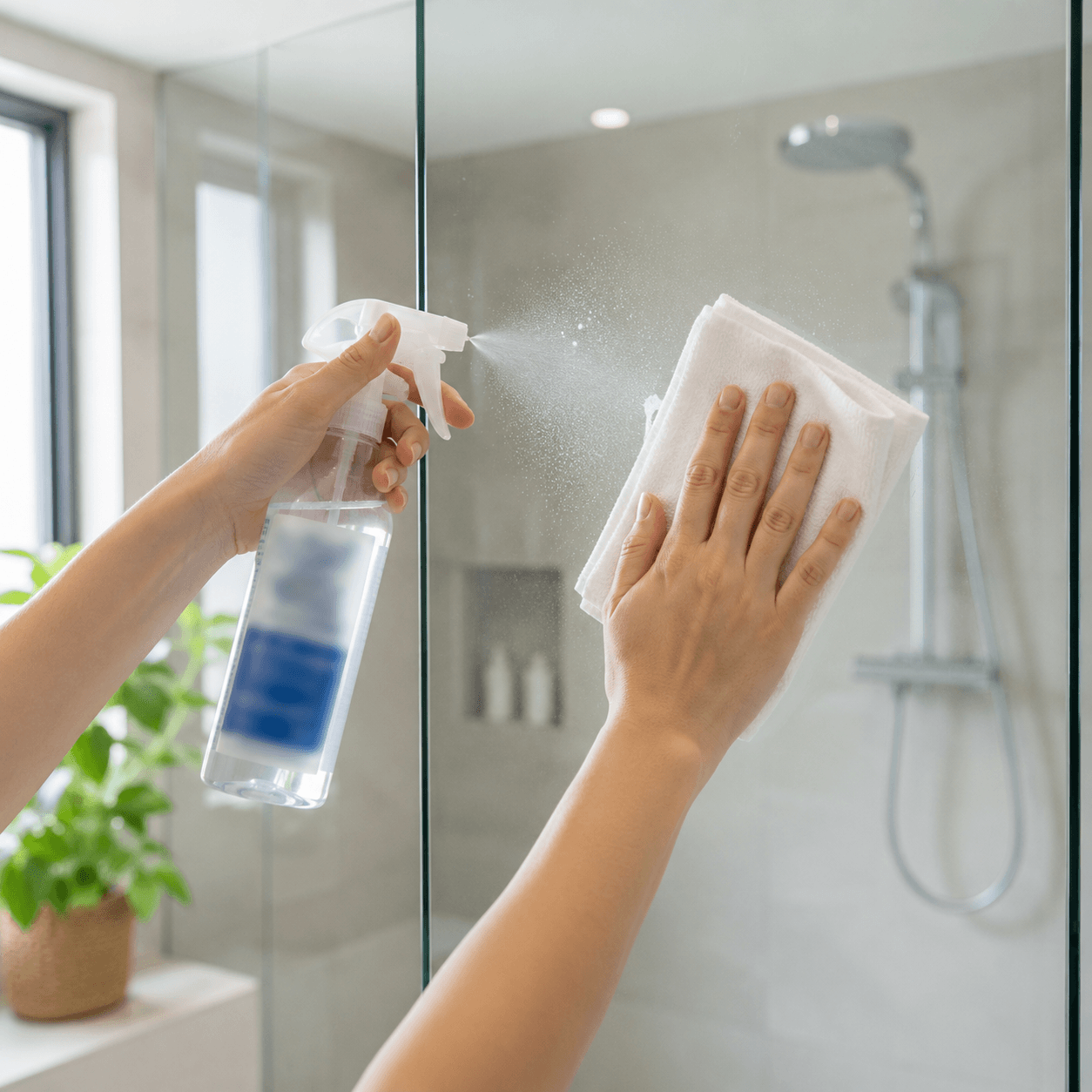
To remove soap scum from shower glass, spray white vinegar or a dedicated cleaner, wait 5 to 8 minutes, then scrub with a non-scratch pad and rinse. Soap scum is oily, a mix of soap, body oil and hard-water minerals, so it keeps coming back on bare glass. The lasting fix is to seal clean glass with a coating that is both water-repelling and oil-repelling, so scum cannot grip. EnduroShield does both, lasts up to 3 years per DIY application from RM218, and cuts cleaning by about 90%.
Soap scum is that cloudy, greasy film that builds up on shower glass and never fully wipes off. It is not just dried soap. It is a mix of three things bonding together: soap residue, natural body oil, and hard-water minerals like calcium and magnesium. Bare shower glass looks smooth, but under a microscope it is slightly porous, full of tiny pits and grooves. That oily mix settles into those gaps and grips.
In a humid Klang Valley or Penang bathroom, this happens fast. You clean the glass on Sunday, and by Wednesday the haze is back. Warm water, daily showers, and Malaysia's hard-water supply give soap scum everything it needs to reform. The film returns because the surface underneath is still bare and still oil-friendly. Left alone, that haze dulls the whole bathroom and gets harder to shift the longer it sits. Cleaning removes today's scum. It does nothing to stop tomorrow's.
How to remove soap scum from shower glass (step by step)
Fresh soap scum lifts off with a mild acid and a bit of patience. White vinegar is cheap and works well. Here is the method that clears most bathroom glass in under 15 minutes.
- Spray white vinegar, or a dedicated glass cleaner, generously across the whole panel until it is fully wet.
- Wait 5 to 8 minutes. The acid needs time to break down the oily, mineral film. Do not rush this part.
- Scrub in circles with a non-scratch pad. A Mama Lemon sponge (about RM4), a Daiso melamine sponge (about RM5.90), or a soft microfibre pad all work.
- Rinse with clean water and check. Re-spray and repeat on any stubborn patch.
- Squeegee, then dry with a clean microfibre cloth so no new water spots form.
If your area has very hard water, a cleaner made for soap scum and limescale will cut through faster than vinegar alone. One warning: avoid harsh abrasives. Steel wool, scouring powder, and rough scrubbers will scratch the glass permanently, and scratched glass traps scum even faster. Stick to non-scratch pads only.
Soap scum vs hard water: which one is on your glass?
Before you scrub for an hour, find out what you are actually fighting. Two different problems look similar but need different fixes.
- Greasy, slippery film that smears when you touch it = soap scum. It wipes clear with vinegar and a pad. This is removable.
- Gritty, rough patches that will not wipe clear no matter how hard you scrub = hard-water minerals that have penetrated (渗透) and etched the glass surface. This is not removable by cleaning. It needs professional polishing (from about RM500) or panel replacement (about RM1,200 to RM3,000).
A quick test: run a dry finger over a cleaned, dry patch. Smooth and clear means the scum is gone. Still rough or hazy means the glass itself has been etched. Very often you have both at once, a greasy layer sitting on top of early etching. Clean off the scum first, then judge what is left underneath. Here is how to tell if your glass is etched.
Why soap scum keeps coming back (and how to stop it)
The reason is simple. Bare glass is porous, and its surface likes to hold on to oil. Soap scum is oily. So the two bond again within days, every time. Wiping harder does not change the surface. To stop the cycle, you have to change the glass itself so scum has nothing to grip.
Think of a non-stick frying pan. Food does not weld to the surface because the coating repels it. A glass coating does the same job for your shower screen.
Here is the key point most people miss. Soap scum is oily, not just watery. A water-only repellent like a Rain-X style spray pushes away water, but it does nothing about oil, so the greasy part of the scum still sticks and the film comes back. That is the wedge. EnduroShield is hydrophobic and oleophobic at the same time: it repels water and oils. Both the mineral side and the oily side of soap scum slide off instead of bonding.
| Method | Stops oily soap scum | Stops hard water | Lasts |
|---|---|---|---|
| Squeegee after every shower | Partial | Partial | Every shower |
| Rain-X style spray | No, water-only | Weak | Weeks |
| EnduroShield coating | Yes | Yes | Up to 3 years |
You can read more on the EnduroShield DIY glass coating kit page, or see the full plan to protect your shower glass.
How to seal your glass so scum can't return (DIY, 10 to 30 minutes)
Sealing clean glass is a job you can do yourself in one sitting. The point is to lock in the clean surface so scum cannot get a grip again.
- Clean and dry fully. Remove every trace of old scum with the vinegar method above, then dry the glass completely. The surface must be spotless and bone dry, because the coating bonds to glass, not to leftover residue.
- Wipe on the coating. Apply in overlapping strokes so you cover the whole panel evenly with no gaps. One kit covers about 40 sqft, enough for a typical shower screen. Keep the bathroom ventilated while you work.
- Let it cure about 8 hours. Keep the glass dry overnight while it bonds. After that, water and soap scum bead up and slide off.
A DIY application costs from RM218 and lasts up to 3 years. A professional application lasts up to 10 years. Either way, you cut cleaning by about 90 percent, because there is far less to clean in the first place. The coating is backed by TUV Rheinland testing since 2011 (Certipedia 0000033462) and made under ISO 9001:2015 by PCT Global Pty Ltd in Australia.
So the short version: clear today's soap scum with vinegar and a non-scratch pad, check whether the glass is only filmed or actually etched, then seal the clean glass so the film cannot return. Clean once properly, protect once, and you stop fighting the same haze every week.
Kent, EnduroShield Malaysia
Want free delivery on your first order?
Drop your email. We send you the code now, and you use it on your first order.
Send me the code →Frequently asked questions
How do I remove soap scum from shower glass?
Spray white vinegar or a dedicated cleaner across the glass, wait 5 to 8 minutes, then scrub with a non-scratch pad like a Mama Lemon or Daiso melamine sponge. Rinse, squeegee, and dry with microfibre. Avoid steel wool or scouring powder, which scratch the glass and make scum build up faster.
Why does soap scum keep coming back on my shower glass?
Bare shower glass is slightly porous and its surface holds on to oil. Soap scum is a mix of soap, body oil, and hard-water minerals, so it bonds to bare glass again within days. Cleaning removes today's film but not the cause. Sealing the glass with a water and oil repelling coating stops the cycle.
Does vinegar remove soap scum from glass?
Yes. White vinegar is a mild acid that breaks down the oily, mineral film in soap scum. Spray it on, wait 5 to 8 minutes, then scrub with a non-scratch pad and rinse. Vinegar clears fresh scum well, but it cannot fix glass that is already etched, and it does nothing to stop scum returning.
Does Rain-X stop soap scum?
Not really. Rain-X is water repelling only, so it pushes off water but not oil. Soap scum is oily, so the greasy part still sticks and the film comes back. To actually stop soap scum you need an oleophobic coating that repels oil as well as water, like EnduroShield, which is both hydrophobic and oleophobic.
How do I stop soap scum building up on shower glass?
Clean the glass fully, dry it, then seal it with a coating that repels both water and oil so scum has nothing to grip. It works like a non-stick pan. A DIY EnduroShield application costs from RM218, lasts up to 3 years, and cuts cleaning by about 90 percent. Squeegeeing after each shower helps too.