Soap Scum vs. Etched Glass: Don't Make Aaron's RM 1,200 Mistake
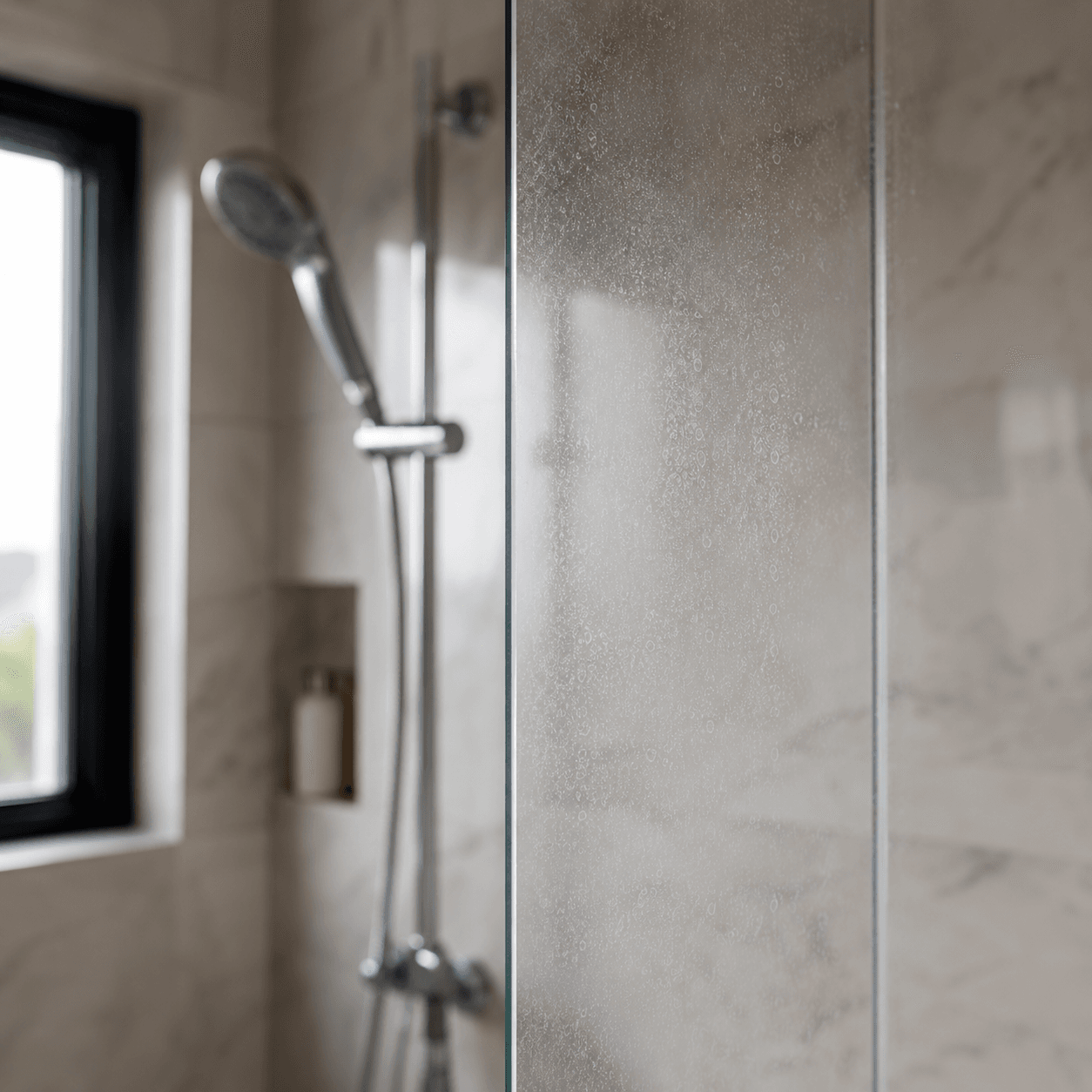
Confusing soap scum with etched glass can cost you dearly, as Aaron in Penang found out, mistaking irreversible damage for a fixable stain for eight months. While both create a white film, only one can be cleaned; the other means replacing your shower screen. Learn the simple fingernail and vinegar tests to diagnose your glass accurately and avoid wasting money or time on the wrong solution.
Alright, let's talk about something that looks innocent but can cost you a small fortune if you get it wrong. I'm talking about that stubborn white film on your shower glass. Is it just soap scum? Or is it something far more serious: etched glass? Aaron, one of our customers from Penang, made this exact mistake for eight months, trying every cleaner under the sun, only to realise his RM 1,200 shower screen was permanently damaged. Don't be like Aaron.
Here at EnduroShield Malaysia, our core belief is simple: clean glass isn't about scrubbing harder; it's about stopping stains from sticking in the first place. But before we even get to prevention, you need to know what you're up against. Because if your glass is already etched, no amount of scrubbing or even a non-stick coating will bring it back to new. It's like trying to fix a scratched car with a polish – some things are just too far gone.
Why This Mistake Costs You Big Time (Like Aaron's RM 1,200)
Imagine this: you see a white, cloudy film on your shower glass. Naturally, you grab your Cif (RM 12 from any supermarket) and a scrubbing brush. You scrub, and scrub, and scrub. Maybe it looks a little better, but it never truly goes away. You switch to stronger chemicals, maybe even some harsh acids you bought online. Still no luck. You spend months, maybe even a year, battling this film.
This was Aaron's story. He had a beautiful frameless shower screen in his new condo in Gelugor, Penang. After about a year, the white film started appearing. He assumed it was just limescale and soap scum. He tried everything: vinegar, baking soda, even a commercial limescale remover he bought for RM 40. He spent countless hours and probably over RM 100 on cleaning products. Eight months later, frustrated and exhausted, he called us. When I explained the difference between soap scum and etched glass, his heart sank. His glass wasn't just dirty; it was permanently damaged. The minerals in the water, combined with harsh chemicals and high temperatures, had literally eaten into the glass surface, creating microscopic pits that trapped dirt and light, making it look cloudy.
For Aaron, the only solution was to replace the entire shower screen, which set him back RM 1,200. That's a huge difference from a simple RM 218 EnduroShield kit that could have prevented the problem in the first place, or even just a bit of elbow grease with the right cleaner if it was just soap scum.
Soap Scum vs. Etched Glass: The Key Differences
Let's break down what these two villains are:
- Soap Scum (Limescale, Hard Water Stains): This is a build-up of mineral deposits (calcium, magnesium) from your tap water, mixed with soap residue, body oils, and dirt. It sits on top of the glass surface. Think of it like a layer of dried mud on your car. It's ugly, but it can be removed.
- Etched Glass (Corrosion, Permanent Staining): This is when the glass surface itself is chemically altered or physically damaged. The minerals and harsh chemicals literally eat away at the silica in the glass, creating tiny, permanent pits and rough spots. This changes the glass structure, making it cloudy and rough to the touch. It's like rust on metal – once it's there, it's very hard, if not impossible, to reverse without professional resurfacing (which is usually more expensive than replacement).
The Fingernail Test: Your First Line of Defence
This is the easiest and most important test. It takes literally five seconds.
- First, make sure the glass is dry.
- Run your fingernail across the white, cloudy area.
- If your fingernail catches or drags, and you can feel a distinct rough texture or even a slight 'ledge' of build-up: Congratulations (or commiserations), you likely have soap scum or limescale. This means the problem is sitting on the glass, not in it. This is good news, as it can be cleaned.
- If your fingernail glides smoothly over the area, feeling no change in texture, but the cloudiness is still visible: Uh oh. This is a strong indicator of etched glass. The damage is embedded within the glass itself, making the surface feel smooth even though it looks cloudy.
Aaron failed this test for eight months. He felt the roughness but thought it was just 'really stubborn' soap scum, not realising that feeling a build-up meant it was still on the surface and potentially fixable, if he had used the right cleaner earlier.
The Vinegar Test: A Simple Chemical Check
White vinegar is a mild acid that's excellent at dissolving mineral deposits like limescale. It won't harm glass, but it won't fix etching either.
- Get a spray bottle and fill it with undiluted white vinegar (the cheap stuff from any sundry shop, maybe RM 3-4).
- Spray the affected area liberally.
- Let it sit for 5-10 minutes. For really stubborn build-up, you can even soak a paper towel in vinegar and stick it to the glass for an hour or two.
- After the waiting time, scrub the area with a non-scratch pad (like a Scotch-Brite non-scratch sponge, RM 5-6 for a pack).
- Rinse thoroughly with water and squeegee it dry with a Vileda squeegee (RM 19.90).
- If the white film significantly reduces or disappears: You definitely had soap scum/limescale. Good job! Now you know what to use.
- If the white film remains largely unchanged, even after repeated applications and scrubbing: This further confirms that your glass is likely etched. The vinegar can't dissolve something that's literally part of the glass structure.
Aaron tried this test too, but he didn't leave the vinegar on long enough, and when it didn't magically disappear, he moved onto harsher chemicals, which only accelerated the etching process.
The Angle-of-Light Test: A Visual Clue
This test requires a bit of observation.
- Stand in front of your shower glass when it's dry.
- Look at the glass from different angles, especially with light shining on it (natural sunlight or a bright bathroom light).
- If the white film looks like a surface layer, sometimes appearing more opaque or 'patchy' depending on the angle, and you can see distinct streaks or drips within it: This is typical of soap scum. It's a build-up on the surface.
- If the cloudiness appears more uniform, diffused, and seems to be 'within' the glass itself, making the glass look generally hazy or milky regardless of the angle: This is a strong sign of etching. The damage affects the entire surface, not just a layer on top. It's like looking through frosted glass, but unintended.
What to Do If You Have Soap Scum (The Good News!)
If your tests confirm it's just soap scum and limescale, great! You can clean it. Here's how:
- Regular Cleaning: For light build-up, a daily squeegee after showering and a weekly wipe-down with a microfibre cloth (Daiso, RM 5.90) and a mild cleaner like Hagerty Mr Glass (RM 28) or even Mama Lemon dish soap (RM 4) diluted in water will keep it at bay.
- Deep Cleaning for Stubborn Stains: For more stubborn soap scum, use a dedicated limescale remover (check for acid-based cleaners, but always test on an inconspicuous area first) or a paste of baking soda and vinegar. Apply, let it sit, scrub with a non-scratch pad, and rinse thoroughly.
- Preventative Coating (The Smart Move): Once your glass is sparkling clean, this is where EnduroShield comes in. Our coating works just like a non-stick pan for your glass. Water, soap scum, and minerals can't grab on, so they slide off easily. This keeps your glass looking like new for far longer and makes cleaning almost effortless. You'll spend maybe 30 seconds wiping it down with a damp microfibre cloth once a week, instead of scrubbing for 30 minutes.
What to Do If You Have Etched Glass (The Hard Truth)
If your tests point to etched glass, I'm going to be brutally honest with you: there's no easy fix for homeowners. Once glass is etched, the damage is permanent. You cannot reverse it with cleaners, polishes, or even our EnduroShield coating. Our coating needs a smooth, clean surface to bond to, and etched glass is rough and porous.
Your options are:
- Live with it: If it's not too severe, you might choose to just accept the cloudy appearance.
- Replace the glass: This is often the only way to get back to perfectly clear glass, as Aaron found out. It's an investment, but sometimes necessary.
- Consider professional resurfacing: Some companies offer glass resurfacing, but this is usually very expensive and often only viable for very large, custom glass panels, not standard shower screens.
This is precisely why prevention is so crucial. It’s 2026, stop scrubbing hard when you can be smart. Nobody told Aaron his glass could 'expire' this way, but now you know.
Protect Your Investment: The EnduroShield Solution
Whether your glass is currently clean, or you've just replaced an etched panel, the absolute smartest thing you can do is apply EnduroShield. Our DIY kits are super easy to use:
- Standard Kit (RM 218): Covers up to 6.5 sqm, perfect for one shower screen.
- Family Kit (RM 338): Covers up to 13 sqm, great for two shower screens or a larger bathroom.
- Pro Kit (RM 648): Covers up to 26 sqm, for multiple bathrooms or a larger home.
(These are currently on sale from their original prices of RM 268, RM 498, and RM 898 respectively – grab them while you can!)
The application takes about 10-30 minutes, depending on the size of your glass, followed by an 8-hour cure time. Once applied, your glass becomes 'hydrophobic' – water beads up and rolls off, taking soap scum and minerals with it. It's like having a permanent non-stick pan for your shower. You'll spend far less time cleaning, and your glass will stay looking new for years, guaranteed for 3 years on new glass, but often lasting much longer.
Don't wait until your glass is etched and you're facing an RM 1,200 replacement bill like Aaron. Be smart, not sorry. Protect your glass today.
— Kent, EnduroShield Malaysia
Protect this glass for 3 years
EnduroShield's DIY kit bonds chemically to shower glass. Australian-made, TÜV Rheinland certified, applies in 10-30 minutes.
Shop the kit →Frequently asked questions
Can EnduroShield remove existing soap scum or etching?
No, EnduroShield is a protective coating, not a cleaner. It must be applied to perfectly clean and dry glass. It prevents new soap scum and etching from bonding, but it cannot remove existing stains or repair etched glass. Think of it like a car wax – it protects a clean car, it doesn't clean a dirty one.
How often do I need to reapply EnduroShield?
EnduroShield comes with a 3-year warranty on new glass, but with proper care (using mild, non-abrasive cleaners and avoiding harsh chemicals), it can last much longer. We recommend re-coating after 3-5 years, or if you notice the water beading effect diminishing.
What causes glass etching in Malaysia?
Glass etching in Malaysia is primarily caused by prolonged exposure to hard water (high mineral content, common in many areas like KL and Selangor) combined with high humidity and heat in bathrooms. When water evaporates, it leaves mineral deposits. If these are not cleaned regularly, they can bond with the glass and, over time, chemically alter its surface, especially if harsh, acidic cleaners are used repeatedly without proper rinsing.
Is it worth replacing etched shower glass?
If the etching is severe and bothers you aesthetically, replacing the glass is often the only way to restore its clarity. While it's a significant cost (often RM 800 - RM 1,500 for a standard shower screen), it's a long-term solution. Once replaced, we highly recommend applying EnduroShield immediately to prevent the new glass from etching again.